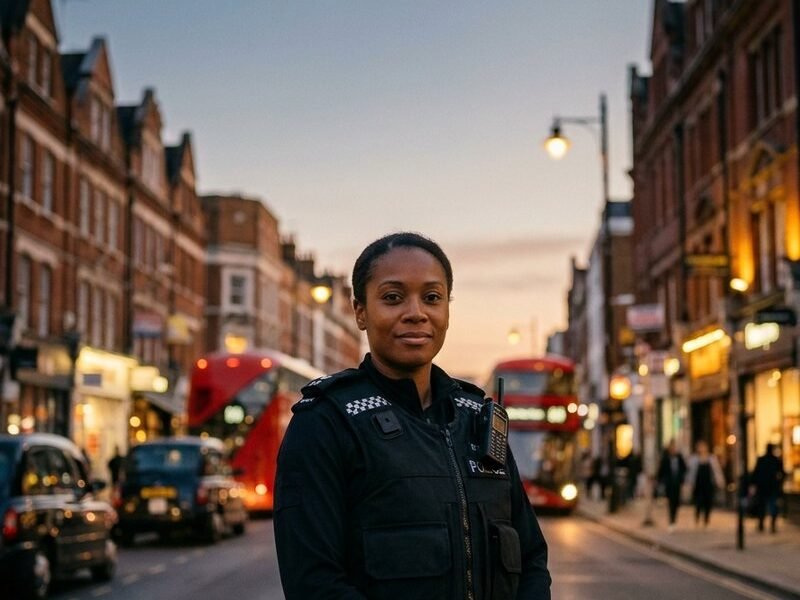
Police officer salary in the UK at a glance
A full-time police officer in the UK earns a median of around £52,569 a year, according to the Office for National Statistics’ Annual Survey of Hours and Earnings (ASHE) 2026, provisional edition: that figure covers police officers at sergeant rank and below, and it includes overtime and allowances, which is why it sits above the basic constable scale. The basic scale itself, set nationally for England and Wales, runs from £31,164 for a newly appointed constable to £50,256 at the top constable point, with sergeants on £53,568–£56,208 and inspectors on £63,768–£68,982 (all figures from 1 September 2025). Officers in the Metropolitan Police and City of London Police get London Weighting of £3,150 a year on top, plus a London Allowance of up to £6,588: a combined addition of up to £9,738. One thing to know before you read on: the government has confirmed a further 3.5% pay award from 1 September 2026, but the Home Office had not yet published the new per-point figures when this guide was last checked in November 2026, so the figures below are the published 2025/26 scales. Read our companion step-by-step UK career guide or browse more benchmarks inside Salaries By Job.
Constable pay points and ranks
Police pay in England and Wales is not negotiated force by force. It follows national scales in Annex F of the Police Regulations 2003, set by the Home Secretary after the Police Remuneration Review Body (PRRB) reports each year. Constables sit on a seven-point scale that carries them from their first day to full operational competence; sergeants and inspectors have much shorter scales, and promotion is the main way pay jumps.
| Rank & Experience Band | Typical Annual Range | Relative Scale |
|---|---|---|
| Police Constable: starting (Pay Point 1) | £31,164 | |
| Police Constable: mid-career (Pay Point 4) | £35,106 | |
| Police Constable: experienced (Pay Point 7, top) | £50,256 | |
| Sergeant (Pay Points 2–4) | £53,568 – £56,208 | |
| Inspector (Pay Points 0–3) | £63,768 – £68,982 |
Those figures are for officers who joined on or after 1 April 2013, which covers almost everyone joining today. Officers who were already in service before that date sit on a separate, slightly higher scale at the lower points. The jump between pay point 5 (£37,737) and pay point 7 (£50,256) looks steep because the scale was redesigned to reward officers who complete their probationary period and reach full competence: in practice most constables take around six to seven years to reach the top point. The ONS median of £52,569 for the whole occupation sits just above the top constable point, which tells you something useful: a large share of serving officers are experienced constables and sergeants, and overtime pushes many above their basic scale. The bottom tenth of full-time officers earn under £35,590 a year and the top tenth earn over £69,225, according to ASHE 2026 (provisional).
London weighting and where you serve
Basic pay is national, so a constable in Cumbria and a constable in Cornwall start on the same £31,164. What changes the total is where you serve. London is the big one, and the South East has its own arrangement too.
| Region | Typical Pay Range | Regional Context |
|---|---|---|
| London (Met & City of London) | £34,314 – £59,994 (constable, with allowances) | London Weighting £3,150 a year (pensionable, guaranteed) plus a London Allowance of up to £6,588 set by the Commissioner. A starting constable in the Met therefore takes home £34,314 at minimum and up to £40,902 with the full allowance; a top-point constable reaches £59,994. |
| South East forces | Base + up to £3,000 | Essex, Hertfordshire, Kent, Surrey and Thames Valley can pay a South East England Allowance of up to £3,000; Bedfordshire, Hampshire and Sussex can pay up to £2,000. The chief constable sets the amount, so check the force’s own advert. |
| Rest of England & Wales | £31,164 – £68,982 | National scales with no location addition. The ONS regional medians for the occupation run from around £47,000 in Yorkshire and the Humber and Wales to about £51,000 in the South East (ASHE 2025). |
| Scotland & Northern Ireland | Separate scales | Police Scotland publishes its own pay points (roughly £30,408–£47,238 for constables in 2025/26) and the PSNI has its own settlement, so the England and Wales figures above do not apply there. |
It is worth doing the London maths properly before you apply. The £9,738 maximum sounds generous, but only £3,150 of it is pensionable, and the allowance part is discretionary: the Commissioner sets it within the maximum, and it can change. Against that, the Met offers free travel on Transport for London services, which is a real saving for officers commuting across the capital. Outside London, the South East allowance is the quiet earner: a constable in Surrey or Kent can be £3,000 a year better off than an identical constable in the Midlands, for the same rank and the same work.
Entry routes: do you need a degree?
There is no degree requirement for most police entry routes in England and Wales: the Police Constable Degree Apprenticeship, the Degree Holder Entry Programme and the Police Constable Entry Programme all lead to the same starting salary. What moves your pay after that is a short list: rank, location, and the extras you pick up along the way. Promotion to sergeant needs the National Police Promotion Framework (NPPF), a written law exam followed by an assessment centre, and the same framework, plus an inspectors’ exam, takes you to inspector. The detective route runs through the National Investigators’ Exam, and detectives also receive a detective allowance on top of basic pay. Specialist roles, firearms, dogs, roads policing, public order, usually pay the same basic scale as any other constable or sergeant, but they bring additional allowances and, in practice, more overtime. Overtime itself matters: constables and sergeants are paid for overtime, normally at time and a third, and major incidents, football fixtures and public-order operations can add a meaningful amount over a year. Finally, the pension is part of the deal in a way that is easy to undervalue. Officers are in the 2015 CARE police pension scheme, a defined-benefit scheme in which the employer contributes far more than in most private-sector jobs; when you compare police pay with a private-sector salary, that pension is worth thousands a year that never appears on the payslip headline.
Police pay awards since 2022
Police pay has moved faster in the last two years than it did for most of the previous decade. The PRRB recommended a 4.2% consolidated award for 2025/26, which took effect on 1 September 2025 and lifted the constable starting point to £31,164. For 2026/27 the review body recommended 3.9% and the government awarded 3.5% from 1 September 2026: but, as noted above, the Home Office had not published the new per-point cash figures by November 2026, so the 2025/26 scales remain the latest published ones. The longer view comes from the ONS. The median for full-time police officers (sergeant and below) was £42,184 in 2021, £49,887 in the revised 2025 figures, and £52,569 in the provisional 2026 release: a rise of about 25% over five years, against a 31% rise for all full-time employees over the same period. In other words, police pay has grown, but it has not kept pace with the wider labour market. That gap is part of why the starting salary was pushed up so sharply in the 2025 award: forces were struggling to recruit, and the review body said so plainly. Expect the next award, due in summer 2027, to be watched closely for the same reason.
Promotion or overtime: what really raises police pay
The honest answer is that the fastest route to more money in the police is promotion, not overtime. A constable who passes the NPPF and makes sergeant jumps from a top constable salary of £50,256 to a sergeant’s £53,568–£56,208, and inspector takes you to £63,768–£68,982: each step also opens the door to the next. The detective track is the other well-worn route: pass the National Investigators’ Exam, complete your detective training, and you move into CID work with a detective allowance on top. Specialist units, firearms, dog handling, roads policing, counter-terrorism, do not usually carry a higher basic scale, but they come with allowances and steadier overtime, and they make a stronger promotion portfolio. If you are still deciding whether to join, the entry route matters less than people think: the degree apprenticeship, the degree-holder route and the direct entry programme all end at the same pay point. What matters more is the force you join: London and the South East pay the allowances above, and some forces offer additional recruitment incentives for hard-to-fill roles. And if you are already serving, the single most valuable thing you can do for your pay is to keep your promotion portfolio current and sit the NPPF when you are eligible, rather than waiting for the “right” year.
Recommended Next Reads: How to become a police officer in the UK · How much does a nurse earn in the UK? · How much does a teacher earn in the UK?
Police pay questions
What is the starting salary for a UK police officer?
A constable who joins a force in England and Wales starts on £31,164 a year from 1 September 2025. In the Metropolitan Police or City of London Police, London Weighting of £3,150 takes that to £34,314, and the London Allowance can take it up to £40,902.
How long does it take to reach top constable pay?
Constables progress through seven pay points, normally one a year, so it takes around six to seven years to reach the top point of £50,256. Progress depends on completing probation and meeting the pay progression standard.
Do police officers get London weighting?
Yes, but only in the Metropolitan Police and the City of London Police. London Weighting is £3,150 a year and is pensionable. On top of that, the Commissioner can pay a London Allowance of up to £6,588, which is not pensionable. Forces around London pay a South East Allowance of up to £3,000 or £2,000 instead.
Is the police pension good?
Officers join the 2015 CARE police pension scheme, a defined-benefit scheme. It is considerably more generous than a typical private-sector defined-contribution pension, because the employer funds most of it and the pension is based on career-average earnings rather than investment returns. The exact employee contribution depends on your pay band.
Where these figures come from
Cited Public Sources (November 2026)
- Police Officer Salary UK: pay scales checked against Home Office Circular 011/2026, Annex F
- Police London Weighting 2026: London Weighting, London Allowance and South East Allowance
- ONS ASHE 2026 (provisional): Police officers (sergeant and below), SOC 3312
- Police Pay Scales Explained 2025/26: rank structure and PRRB awards
- ONS: Annual Survey of Hours and Earnings (ASHE)
Figures represent published UK averages, medians and estimated ranges: never a guaranteed salary. Actual pay varies by employer, shift enhancements and location. Pay scales are the published 2025/26 figures (from 1 September 2025); the 3.5% award from 1 September 2026 is confirmed but per-point figures had not been published when this guide was checked.
Related UK Career Guides
 £50,745
How much does an accountant earn in the UK?
Part-qualified AAT/ACCA trainees start near £28K–£34K, leaping sharply to £50K–£65K+ once fully Chartered (ACA/ACCA/CIMA).
 £40,717
How much does an electrician earn in the UK?
JIB Gold Card electricians earn strong employed packages (£32,274–£50,018), while EV-charger, solar battery and commercial contractors regularly surpass £60K+.
 £33,334
How much does a chef earn in the UK?
Commis and Chef de Partie pay rose sharply alongside UK National Living Wage floors, while Sous and Head Chefs in London hotels earn £42K–£58K+.